The influence of Aristotle's philosophies in modern writing
Even in modern society, it’s possible to see ancient civilization’s effects on writing. Philosophers such as Plato and Socrates have secretly shaped the way we write. To be specific, the ancient Greek philosopher Aristotle formulated the way persuasive writing is created. He developed the three ideas of Ethos, Pathos, and Logos, each of which help sway an audience to support a writer's opinions and ideas. By using these three literary devices a writer can prove their point and convince the audience of their findings. Aristotle’s persuasion tactics allow the reader to be viewed as powerful, confident and influential. Well written non-fiction persuasive writing incorporates Aristotle's ancient ideas of Ethos, Pathos and Logos to help proove an argument.
Ethos has been used throughout history as a way to prove that an author is a credible source of information. Once said by Aristotle himself “We believe fair-minded people to a greater extent
and more quickly than we do others” (Aristotle). Within a History Alive Podcast episode starring Aris Tambakis, we are able to see how he effectively uses ethos to prove that he is a credible source. “In this show, we explore the history of the United States and listen to experts discuss various topics. Today we welcome Aris Tambakis, a student at Choate Rosemary Hall, who is currently enrolled in US History” (Tambakis, “History Podcast”). By showing that the researcher is currently a student enrolled in US History, the show proves to the audience that Aris is a credible source.Writers are also able to the emotional device of pathos to persuade and audiences opinion.
Bringing emotion and personal opinion into a piece of writing is usually a negative thing, however,
the pathos literary device can be useful when trying to persuade someone's opinion. In an online article titled 9 positive effects of donating money to charity, the author conveys to the reader why it is important to donate and the personal benefits from it:
“We don’t live in a perfect world...there are always people out there in need of help ...or even if you're experiencing financial difficulties of your own, the reality is that when you donate your money, you help others who need it” (9 Positive Effects of Donating Money to Charity, thelifeyoucansave.org).
The writer uses the argument that you will feel emotionally better if you help someone in need to try and persuade you to donate money. The audience’s emotions are hijacked and controlled by the author.Emotional arguments are not always able to sway a person, so often times writers rely on the rhetorical device of Logos which uses facts to prove their point.

By using Logos, the writer is able to effectively and undisputedly make an argument. Their use of facts to back up and opinion or Thesis gives uncontested evidence toward their claims. In another part of the History Alive podcast segment, Aris Tambakis discussed how during the 1920’s the most important advancements in aviation were made. He used the example of Charles Lindbergh’s transcontinental flight across the Atlantic to prove how quickly aviation improved during the early
1900’s. “On May 21st of 1927, Charles Lindbergh arrived in Paris France after a 33-hour trip across the Atlantic Ocean... This flight shattered the perceptions of the possibilities of air travel... Lindberg proved that air travel was not only possible but also a viable means of transportation” (Tambakis, “History podcast”). Using Charles Lindbergh's flight as an example of aviation achievements, the writer is able to use an example from history that is indisputable and pure fact. It is clear that the usage of Logos within an academic essay is essential to proving that your point is valid.
It is clear that Aristotle’s philosophies on persuasion rhetoric had greater implications than just in his personal studies. His invention of the three rhetorical devices has greatly impacted persuasive writing and has influenced our lives unbeknown to us. The way society argues or proves a point is all based on his ancient ideas of ethos pathos and logos. When listening to the news or a public speaker they often use these strategies to capture your attention and draw the listener in. Aristotle's beliefs in how rhetoric would affect our everyday lives have definitely become a reality. “The duty of rhetoric is to deal with such matters as we deliberate upon without arts or systems to guide us, in the hearing of persons who cannot take in at a glance a complicated argument or follow a long chain of reasoning” (Aristotle). Here is a documentary on Aristotle for further information on his life Click here
Thank you for reading my piece. Click here to read my previous post.
Formal academic language, proposed by a bald Choate Rosemary Hall English teacher Andrew Bald Arcand, establishes a conventional language requirement for student-produced essays across different disciplines. Eliminating grammatical errors, redundant vocabulary, and unnecessary ideas, formal academic language aims to decrease defects in the language that potentially ruin the readers' reading experience. May formal academic language improve the students' writing, it does more harm than benefit to the readers' reading experience. Formal academic language may restrict the art and increase the absurdity of the language, humiliate the readers, inhibit expressions of ideas, and limit the readers’ empathy.
His elitist Harvard experience does not make him a better NFL QB. Similarly, the elitist formal academic language does not necessarily generate better writing.
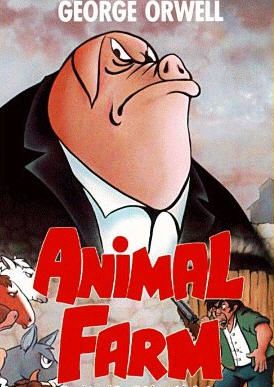
Formal academic language restricts the art of English language, particularly the use of rhetorical devices. In my freshman year, when I wrote an essay examining the democratization of Cuba, I used George Orwell's The Animal Farm the illustrate the potential negative outcome of Cuban Westernization: “Thus, if the current government is overthrown by a new “democratic” government, the reality will be like the Napoleon government in George Orwell’s The Animal Farm” (Hao, “Economic Changes Ensure Cuba a Brighter Future”). My teacher, however, frenziedly criticized me for not making it clear why I addressed The Animal Farm, saying that it may confuse the readers. But, c'mon, man! We are all educated individuals, and we all know that I'm using The Animal Farm as an allusion. It flatters the readers when they find themselves understanding something that is not elaborated in detail so the readers will like my writing. The standard of academic writing, which requires everything to be elaborated to the finest detail, will bore the readers' asses off and without clarifying anything the readers may misunderstand.
The formality of formal academic language can be ridiculously absurd and humiliates the readers. In the essay examining different concepts of social psychology in the Oscar-winning movie “Crash,” pieces of racial slur is quoted to examine the concepts of relational aggression and in-group bias: “Anthony uses the phrases ‘Chink’ and ‘dopey fucking Chinaman’ when he describes the Cambodians he encounters” (Hao, “Prejudice, Aggression, and Altruism in Crash”). Based on the standard of formal academic language, this sentence fails to elaborate the meaning and reason of addressing Anthony’s words and needs further revision. An improved way to refine this sentence, per formal academic language, requires an additional sentence explaining the significance of “Chink”—a vulgar vocabulary that debases Chinese people, “dopey”—an ironic use, aiming to achieve the opposite effect, that illustrates the nerdiness and weirdness of stereotypic Asians, and “fucking”—the utmost direct vocabulary that demonstrates the most original form of unspoiled aggression. These three in-depth explanations of “hard, possibly confusing vocabulary,” aiming to eliminate possible confusions, do satisfy the requirement for formal academic language. However, in reality, these three lines do nothing but offending the readers, as readers can understand the meaning of racial slurs without the aid of any further explanations. Explaining these words in depth would either show that the writer perceives the readers as ignorant and inferior or wants to achieve an ironic effect: the excessive formality of the language may conversely decrease the formality of the tone of the passage, as the readers may think that the writer purposefully implements a satirical tone. The original sentence, though disappoints some readers who pursue perfectly formal language, successfully appeals to most reader’s understanding without offending them.
Anthony (Cast by Chris "Ludacris" Bridges) in Crash
Formal academic language changes the connotation of specific words, inhibits the expressions of some ideas, and restricts human empathy in disciplines such as sociology, psychology, and philosophy. These three disciplines examine the patterns of human thought, emotion, and behavior, all of which the readers may find relatable to. So an piece with informal language that captures the vividity of an event or an emotion may appeal to the readers more, compare to a strictly formal piece, which readers may find complex and boring. When a sentence deliberately leaves an idea or an emotion unelaborated, it leaves a space for the readers to fully elaborate it in their minds and adds in their own emotion and interpretation. Elaborating excessively on some universal emotions and experiences prevents the readers from having this space to empathize with the writer, and formal academic language may impede the expression some emotions the writer aims to express by avoiding formal academic language. In the psychology essay that examines teenagers’ reactions to awkward social interaction, the following paragraph examines the relation between teenager’s social development and their reactions to social interaction:
“Craving social acceptance, high school students react relatively dramatically even to the most minimal signal of unfriendliness or aggression. One ‘staree’ reported feeling ‘socially accomplished’ after being able to have a short talk with a ‘starer’ and ‘roasted him again’ after the incident. However, she admitted that ‘it’s honestly a little hurtful when you say hi to someone and he/she doesn’t reply back, especially when that person has made eye contact with you and sees that you are trying to interact, even for a few seconds … [as a result] one’s confidence diminishes.’ Other ‘starees’ used vocabulary as strong as ‘offended’ when addressing awkward social interactions in the past. Most of the ‘starees’ had strong psychological reactions towards awkward incidents despite hiding physical responses and appearing composed.” (Hao, “An In-depth Examination of Choate Students’ Reaction to Unwanted Social Interaction”)
Formal academic language considers several words
and phrases in the first sentence redundant and unnecessary in this paragraph:
“relatively” “even,” and “the most.” But deleting these words would also
eliminate the connotation that high school students do react to small signals
of unfriendliness and aggression while other people do not, and these people
may perceive these reactions to small signals unnecessary. In addition, the
formal academic language would require an explanation of “socially
accomplished,” reasoning that the definitions of social accomplishment vary
among different people and need further clarification. However, you all would
know what "socially accomplished" means, even if I don't elaborate
it, because you all have had similar experiences. Even though some of you
cannot verbalize the exact meaning of "socially accomplished," it
does not mean that you would have trouble understanding it. Expanding the
entire verbal explanation of the phrase would, instead of clarifying a
potentially confusing phrase, only makes the language redundant and impair the
readers’ empathy and comprehension.
Formal academic language impedes the expression
of art and ideas, ridicules the readers, diminishes the formality of the tone,
and decrease the empathy between the readers and the writer. Formal academic
language fails to improve the students’ writing or appeal to the readers’
interest. In addition, Andrew Bald Arcand may have established his formal
academic language not intending to purify his students’ writing. Instead,
formal academic language, carrying the name “academic,” illustrates his
internal narcissism and intention to demonstrate his superiority above his
students. The word “academic,” insinuating the superiority of his intelligence,
implies that the readers who fail to comprehend or manipulate the complex
diction or logic under formal academic language are inferior to the writers,
and more importantly, Arcand himself. Similar to Nick Carraway in the Great
Gatsby, who selects certain diction to exclude some readers from understanding
the language of his elitist group (Hao, “The ‘Passing’ of Gatsby”), Arcand
concocts his formal academic language to break the rapport between readers and
the author, to create a sense of authority by minimizing the use of simple
language, to exclude readers from understanding his text, and more importantly,
to prevent his students from successfully abiding by his standard. Giving those
students Ds and Fs, Arcand successfully satisfies his deprived need of pride
and narcissism. Thus, to improve his students’ writing and to construct an
image of himself as a fair, authentic teacher, Arcand should abolish--at least
revise--the standard of formal academic language.
Originally developed to record things like how many goats a person received in exchange for building a stone wall, writing slowly evolved over time to express more complex human thoughts and emotions (than the ones of livestock and their value). The communication of human ideas, experiences, and emotions is now known as literature, and is usually split into two forms: fiction and nonfiction. Fiction and nonfiction writing relate experiences and emotions, but writers of fiction create characters and events that are mostly imaginary. Non-fiction writers make sure that the facts of the story are based on actual events. There are plenty of ways to make non-fiction writing interesting (ever read Maus?) Even though nonfiction has to be accurate, creative nonfiction writing shares many of the literary styles and techniques of fiction.
Another form of nonfiction: analysis of literature or art in essay form. You can examine fiction, which creates its own nonfiction piece. These essays or analyses can be social commentaries or even guidebooks to the novel itself (who wants to read The Odyssey without a little extra help?) A good critical essay can serve as a sort of bridge of communication between writer and reader.
Effective writing is also good at making you connect to the subject of the story. Writers use certain images that draw a certain emotion out of you, and make you empathize (or not empathize) with a character. Good writing can also be described as good storytelling. A well written story invites you to answer the following questions: “Why do we care? How does this information connect the reader to the world beyond and make him or her care about those connections?” If successful, good writing conveys the connections that define what it means to be human, explains the events and emotions of the past and present, promotes understanding between different people and cultures, and leaves the reader to marvel at the power and beauty of words.
I only liked two bands/artists from the UK. One is Ellie Goulding because she has a great voice, and the other is Queen. I grew up listening to "We Will Rock You," but recently, I found more connection to their song "I Want to Break Free" after I read the piece from Henry David Thoreau. Here's the link to the song if you're interested. It's a really good song (click on the photo to go to the song).
Here's how the song goes:
I Want to Break Free! I Want to Break Free from your lies You're so self satisfied I don't need you I've got to break free God knows, God knows I want to break free
(Deacon:2-6)
The song, surprisingly, reflects almost identical ideas from the Essay “Civil Disobedience” in the modern day setting. Henry David Thoreau, the author of “Civil Disobedience,” illustrates his ideas and visions of an ideal government in the essay. Thoreau emphasizes on the importance of a free government, and the power of which belongs to the people themselves. Contrary to what Thoreau believes, an increasing amount of modern governments have become restrictive to people’s free will and their rights. Thus, resonating with Thoreau’s essay, the Queen’s song reflect the strong will of people, to escape the chains of the restrictive government and to gain more freedom from the current political settings.
I grew up as a Chinese, and I still recognize myself as one. While believing in the greatness of my mother country, I kept my open mind and attended school in the US. My exposure to this brand new culture gave me new perspectives on China. As I was reading Thoreau's work, I instantly started to think about my mother country.
Thoreau believes that people’s conscience and free will should come first before the government. He writes: “Must the citizen ever for a moment, or in the least degree, resign his conscience to the legislator?” Thoreau believes that every government should be “expedient” in terms of helping its citizens to promote what is right for them.
I can't stop thinking about the current state of China. Media bans still exist; people are afraid to experss their free wills; and, the internet firewalls formed a giant prison to trap the Chineses inside. Oh heck, I can't even check my friends' instagram post when I get home! With my experience both in the US and in China, I started to feel that I am in shackles. The government, though being "expedient" in many ways, suffocates my free will.
Queen’s song, hence, reflects my will with its strong lyrics: “I want to break free!” The simple diction and the strong tone of the song accurately captures Thoreau’s passion to break from an “inexpedient” and restrictive government and to prioritize his conscience before justice.
Nevertheless, I still miss my home, and I still cherish my mother country. As people always says, the first step of solving a problem is to realize that there is one. I hope that more brave people can stand up and experss their thoughts, motivated by their conscience, and I trully believe that day will be here.